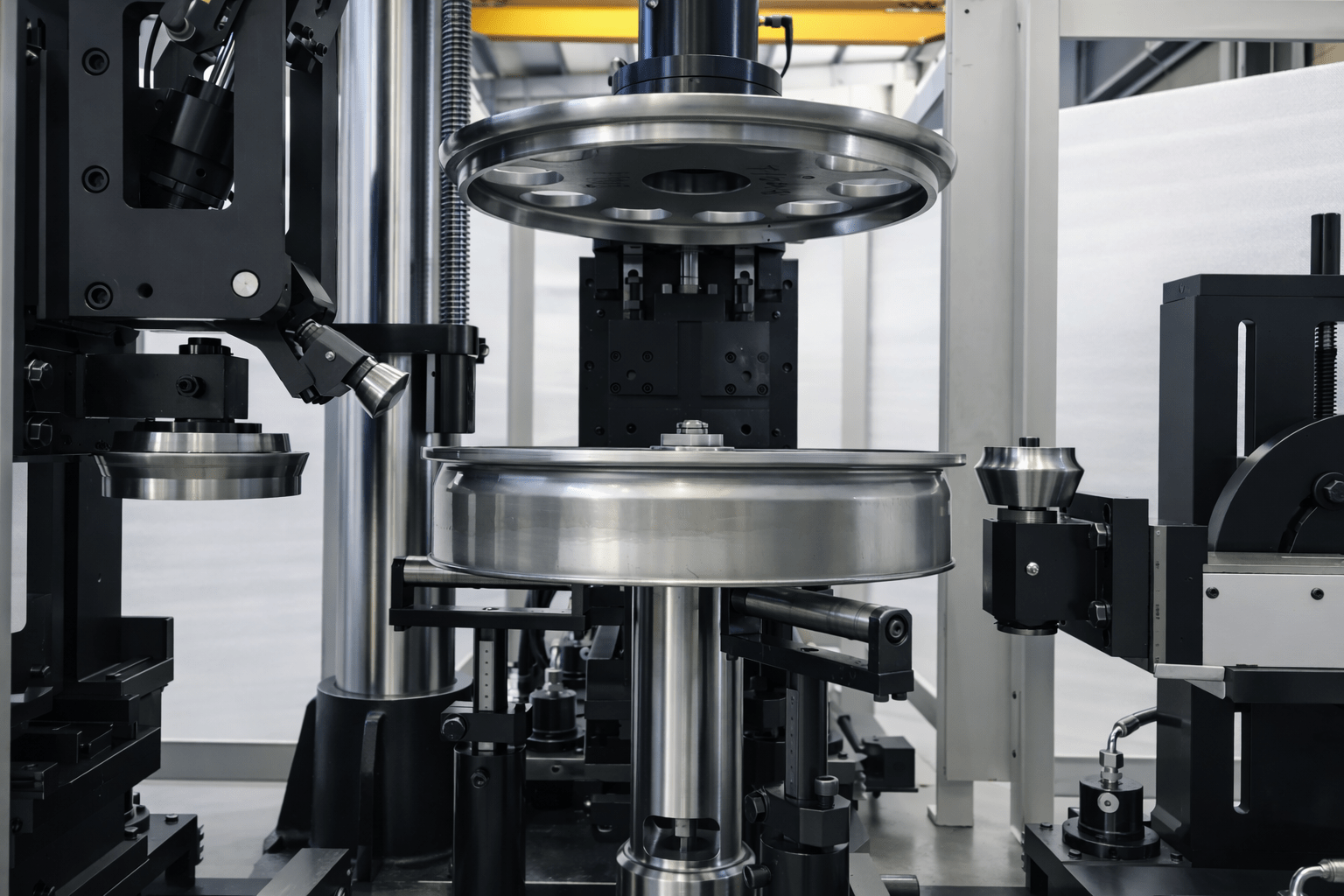


Controlled forming for high-precision automotive pulleys.
Material savings, stable concentricity and repeatable groove geometry.
Up to 200 parts per hour with industrial consistency.
The Challenge
Transmission systems demand precision.
Traditional pulley manufacturing relied heavily on machining and pressing operations.
This meant higher material waste, longer cycle times and tooling costs that limited flexibility.
Manufacturers needed:
- Reduced material consumption
- High groove precision
- Stable concentricity
- High production rates
- Reliable belt contact performance
All while maintaining strict automotive tolerances.
The DENN Solution
DENN developed a controlled forming strategy using rotary forging and rotary grooving technologies, implemented on RF and MPT machines.
Instead of removing material through machining, we shape it through controlled deformation.
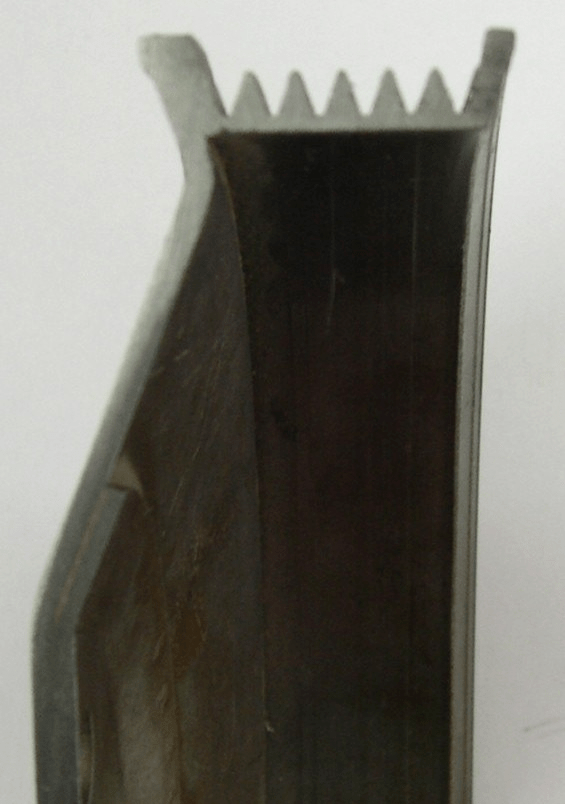
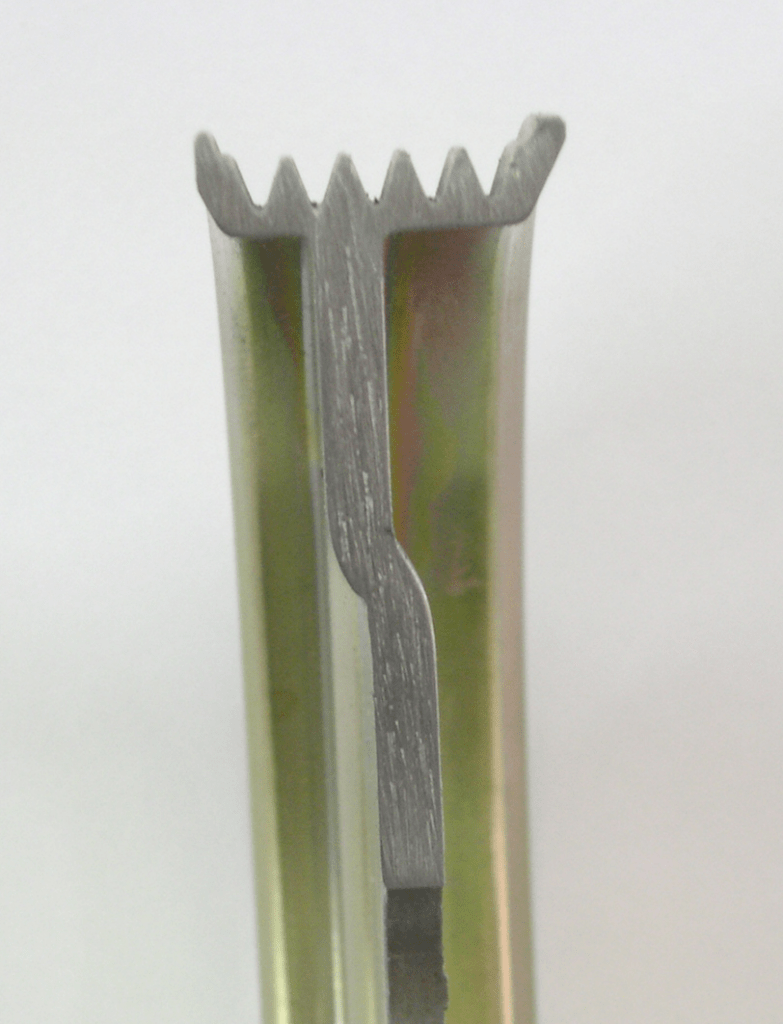
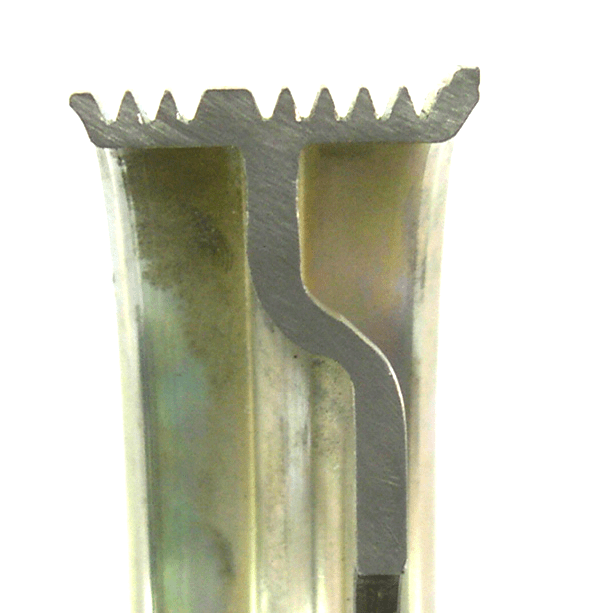
Depending on the pulley type — trapezoidal, multi-channel or Poly-V — the process may include:
- Near-net-shape preform production using rotary forging (RF)
- Splitting and shaping operations from flat disks
- Progressive grooving with profiled rollers
- Multi-pass forming to accumulate material in critical areas
- Final shaping with controlled concentricity
The material flows where it is needed.
No excess. No unnecessary removal.
The Result
Controlled deformation delivers:
- Important material savings compared to machining
- Production rates up to 200 parts per hour
- High groove precision and repeatability
- Compacted surface finish improving belt lifespan
- Reduced axial and radial run-out
Poly-V pulleys, increasingly used in automotive transmission systems, benefit particularly from this process — combining high power transmission capacity with stable geometry and efficient production.
Why It Matters
When tolerances are tight and volumes are high, stability defines competitiveness.
By replacing subtractive processes with controlled forming, manufacturers reduce waste, improve mechanical properties and increase output consistency.
At DENN, we do not just form pulleys.
We control material flow to stabilise transmission performance — part after part.